

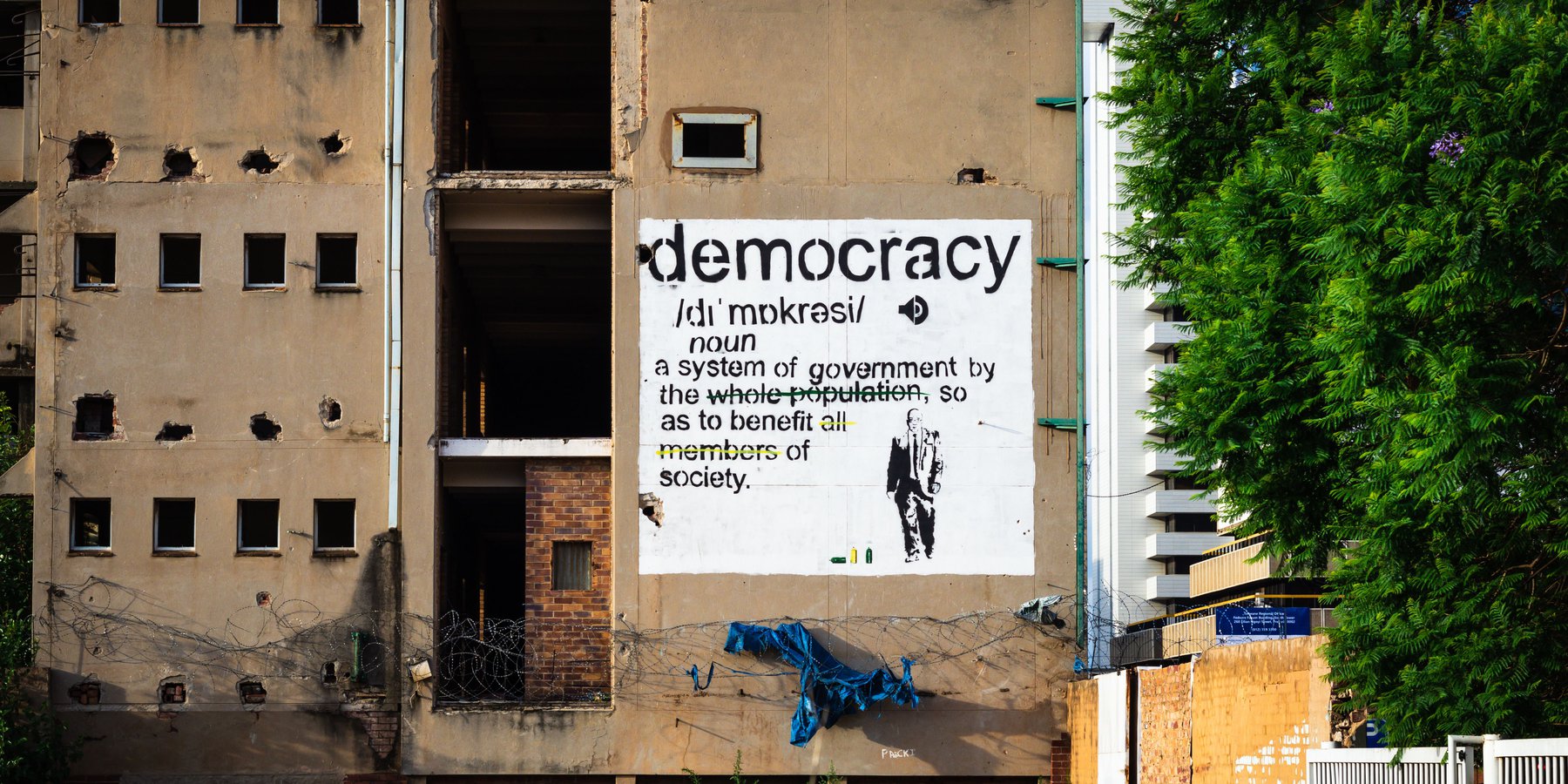
September 15 is the International Day Of Democracy. But what is democracy?
Most agree that democracy is some form of “rule by the people”. But it’s open to debate what that actually means in practice, and what should be considered fundamental parts of the definition of democracy.
Do we go with a ‘minimalist’ definition with the existence of elections in which people can vote for their representatives at regular intervals? Does it include protection of individual and minority rights, and checks and balances that limit the power of elected officials?
Does democracy mean that political decisions are informed by a process characterized by respectful and reason-based dialogue at all levels? Or even further, does it mean direct rule and active participation by citizens in all political processes, and giving all groups in society the economic and social means to participate equally?
Varieties of Democracy
The Varieties of Democracy (V-Dem) project aims to capture as many different understandings of what democracy is as possible to not limit the data to one particular definition. V-Dem distinguishes between five principles of democracy: electoral, liberal, participatory, deliberative, and egalitarian democracy.
Each of these principles represents a different way of understanding “rule by the people.” The heart of the differences between these principles is in the fact that different schools of thought prioritize different democratic values. So while no single principle captures all the meanings of democracy, taken together, these principles provide a fairly complete picture of how the concept is understood today.
In a series of short articles, we will go through each of the five principles, and the V-Dem indices that represent them. You will find the articles here and in the V-Dem social media channels. But before we start, it’s important to point out that V-Dem does not only measure indicators for those five principles. The V-Dem dataset includes several hundred indicators and many other interesting indices, as well as variables that are not part of any index.
Explore the Data
Explore variables such as ‘Election boycotts’, ‘Domestic autonomy’, ’Use of social media to organize offline violence’ and more with the V-Dem graphing tools.
To dig deeper into the data, select a graph and then ’Selected V-Dem variables not included in indices’ under the heading ’V-Dem Indices’. You can also go directly to the heading Components” to find variables sorted by subject areas.
Happy International Day of Democracy!
Photo by Clayton/Pexels